
Many women feel like their bodies betray them after childbirth or in midlife. Seemingly out of nowhere, energy tanks, sleep gets disrupted, hormones feel out of control, and bones start aching. What if this crash isn’t random—or “just aging”—but a predictable mineral depletion pattern that can be tested and reversed?
Let’s explore the crucial role of minerals in postpartum and midlife health, and how rebuilding these “spark plugs” of the body can restore your energy, mood, metabolism, and bones from the inside out.
Minerals: The Spark Plugs of the Body
Minerals aren’t just micronutrients you find in a multivitamin. They’re the foundation of every major function in the body, including:
- Energy production (via the mitochondria)
- Hormone synthesis and conversion
- Detoxification and liver function
- Nerve conduction and muscle function
- Stomach acid and digestion
When core minerals like magnesium, calcium, sodium, and potassium are out of balance, every system starts to struggle. You might eat clean, exercise, and take supplements, but without mineral balance, your body can’t access or utilize those nutrients effectively. That’s why you can do “all the right things” and still feel flatlined.
Especially during postpartum and perimenopause, when hormones fluctuate wildly and nutritional needs shift dramatically, these minerals become even more critical. Yet they’re often the most depleted.
Why Postpartum and Midlife Deplete Minerals So Deeply
1. Pregnancy and Breastfeeding Drain the System
During pregnancy, your baby draws minerals directly from your tissues and bones. Then comes breastfeeding, which continues the drain. If you weren’t fully repleted before conception, this can leave you seriously depleted.
Did you know women can lose up to 20% of their bone density during breastfeeding? This explains postpartum joint pain, brittle nails, anxiety, and even cavities. Your body literally pulls from itself to nourish your child.
Symptoms of mineral loss in the postpartum period can include:
- Tooth sensitivity or demineralization
- Fatigue that doesn’t resolve with rest
- Dizziness or feeling “wired but tired”
- Breastfeeding anxiety or mood swings
Without remineralizing, these deficits carry into future pregnancies, midlife, and beyond.
2. Midlife Hormonal Shifts and Stress
Perimenopause and menopause bring a storm of hormonal changes. Estrogen, progesterone, and cortisol levels all fluctuate—which directly impacts how minerals are used and stored.
Chronic stress also uses up key minerals (especially magnesium, sodium, and potassium), leaving women more susceptible to:
- Thyroid dysfunction
- Osteopenia or osteoporosis
- Insomnia
- Blood sugar instability
Midlife is not just about hormones—it’s about mineral reserves that need to be restored.
HTMA: The Test That Sees What Blood Work Misses
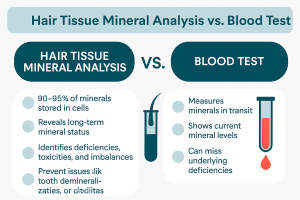
Most women are told their blood work is “normal” even when they feel terrible. That’s because blood tests show only what’s currently in circulation. They don’t reveal what’s going on inside your cells, where 90–95% of your minerals actually live.
Hair Tissue Mineral Analysis (HTMA) offers a 3-month window into your intracellular mineral status. It tells us:
- What minerals you’re low in (e.g., magnesium, calcium, zinc)
- What minerals are too high (e.g., copper, calcium buildup)
- Whether you’re excreting toxic metals (e.g., aluminum, mercury)
- Your metabolic type and adrenal function pattern
For postpartum women or those in midlife, HTMA can identify the root cause behind symptoms like:
- Constant fatigue
- Thyroid issues despite “normal” TSH
- Anxiety or panic attacks
- Bloating or digestive issues
This test allows for targeted, effective support instead of random guesswork.
Are Thyroid Issues Actually Mineral Issues?
Your thyroid doesn’t operate in a vacuum. It requires at least nine essential minerals to function properly:
- Iodine for hormone production
- Selenium for T4 to T3 conversion
- Zinc and copper for receptor sensitivity
- Magnesium and sodium for adrenal-thyroid communication
If even one of these is deficient, you can have “normal labs” but still experience:
- Cold hands and feet
- Hair thinning
- Brain fog
- Low libido
Supporting the thyroid holistically means rebuilding minerals, not just increasing T3 or T4 on a prescription pad.
The Forgotten Link: Minerals and Stomach Acid
Stomach acid isn’t optional. It’s critical for:
- Digesting protein
- Absorbing minerals
- Killing pathogens
And you can’t make stomach acid without sodium. Unfortunately, salt has been wrongly demonized, especially among women, leaving many chronically low in stomach acid. This creates a cascade of issues:
- Poor digestion
- Nutrient malabsorption
- Increased susceptibility to parasites, mold, or H. pylori
In women with low thyroid function or adrenal fatigue, stomach acid is often low. That means even the best diet can become a source of bloating and infection risk without enough mineral support.
Case Study: Sarah’s Postpartum Rebuild
Background: Sarah, 38, came in 6 months postpartum with extreme fatigue, dizziness, anxiety, and brittle nails. Her GP said her iron and thyroid labs were “fine” and recommended antidepressants.
What We Found: Her HTMA showed:
- Severely depleted sodium and potassium
- Low magnesium
- Elevated calcium relative to phosphorus (indicating calcium buildup, not usability)
- High copper and low zinc
What We Did:
- Added specific electrolyte minerals daily (via food and supplementation)
- Supported her adrenal and thyroid systems with targeted nutrients
- Addressed her copper/zinc imbalance through diet and gentle detox
Outcome: Within 3 months, her energy improved significantly. Anxiety episodes decreased. She no longer experienced post-meal crashes or hair shedding. Most importantly, she felt empowered with a plan.
FAQs: Mineral Health After Birth & At Midlife
Q: Can I just take a multivitamin to cover my mineral needs?
A: Most multis have poor forms of minerals, and the wrong balance. For example, too much calcium without magnesium or vitamin K can do more harm than good. It’s better to test and target.
Q: Isn’t calcium the most important mineral for bones?
A: Not alone. Magnesium, vitamin D, vitamin K2, and boron are just as critical. Without them, calcium can build up in soft tissues instead of being directed to bones.
Q: How often should I do HTMA testing?
A: Every 3–6 months is ideal while rebuilding. Once your levels stabilize, yearly is often enough.
Q: How do I know if I’m low in minerals?
A: Signs include fatigue, cravings, dizziness, anxiety, insomnia, muscle cramps, PMS, or feeling worse with fasting. Blood tests rarely catch this, so HTMA is key.
Q: Is it safe to take minerals while breastfeeding?
A: Yes—and often necessary. In fact, minerals like magnesium and sodium help support milk supply, calm the nervous system, and restore lost reserves. Always work with a practitioner who understands dosing.
Final Thoughts
Mineral depletion is at the root of so many “invisible” health challenges that women face in the postpartum window and during midlife transitions. Instead of guessing, we can test and restore the foundations that drive energy, hormone balance, bone health, and mood.
Whether you’re rebuilding after birth or navigating the shifts of perimenopause, focusing on minerals might be the missing link.
Need help figuring out your mineral status? Book a hair mineral consultation with our clinic and get a clear roadmap to rebuild your energy and vitality—naturally.
